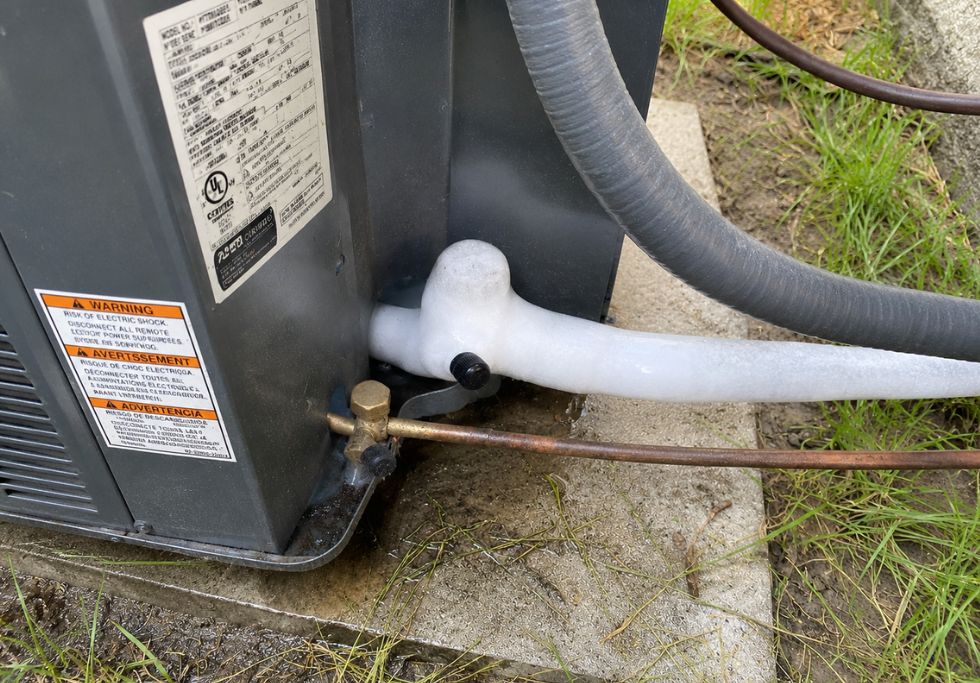
📌 Key Points
- What ice means: A frozen coil or iced refrigerant line is a symptom, not the disease. Something is starving the system of airflow or refrigerant.
- Your first two moves: Switch the thermostat from Cool to Off, then set the fan from Auto to On. Warm indoor air across the coil thaws it safely while the compressor rests.
- Never chip the ice: Coil fins and copper lines bend and puncture easily. Let it melt on its own, which can take a few hours to a full day.
- Check the filter first: A clogged air filter is one of the most common causes, and the U.S. Department of Energy notes a clean one can cut AC energy use by 5 to 15 percent.
- Watch the thaw: Melting ice can overwhelm the drain pan and flood the area around the air handler, so keep towels ready and confirm the drain line is flowing.
- The real risk: Running a frozen system can destroy the compressor, the most expensive part of your AC. Ice that returns after a filter change points to a deeper airflow or refrigerant problem that needs a technician. Refrigerant work is limited by law to EPA-certified technicians.
Ice on your air conditioner in the middle of an Orlando summer looks impossible, but it is one of the most common AC problems in Central Florida. Here is the short version: ice means the evaporator coil is running colder than it should, and that happens for one of two reasons. Either airflow across the coil has collapsed, usually because of a clogged filter, or the system is low on refrigerant because of a leak. The ice is the symptom. One of those two problems is the disease.
Before anything else, switch the thermostat from Cool to Off and set the fan to On. Then keep reading. The next hour of decisions often determines whether this ends with a fresh air filter or a compressor replacement.
How an Air Conditioner Freezes in 95-Degree Heat
Your AC does not make cold air so much as it removes heat. Refrigerant inside the indoor evaporator coil absorbs heat from the warm air your blower pulls across it, and in a healthy system the coil surface runs cold but stays above freezing. Two things can push it below 32 degrees.
Starved airflow. The coil depends on a steady stream of warm return air to feed on. Choke that stream with a dirty filter, closed vents, or a weak blower, and the coil overcools. In Florida humidity, the coil is already dripping with condensate, so the moment its surface crosses freezing, that water becomes frost, then a solid block. The ice then blocks even more airflow, and the failure feeds itself.
Low refrigerant. Refrigerant does not get used up. If a correctly charged system is now low, it almost certainly has a leak. A system can also be undercharged from the start. Less refrigerant means lower pressure inside the coil, and lower pressure makes the refrigerant boil at a colder temperature, dragging the coil below freezing even with perfect airflow.
Humidity is also why Florida systems ice up so dramatically. Our air carries an almost unlimited supply of moisture to the coil, so a freeze that might stay a light frost in Arizona becomes a block of ice in Sanford. The same moisture that keeps your condensate drain busy all summer becomes the raw material for the ice.
What Causes a Frozen AC Coil?
| Cause | How It Starves the Coil | DIY or Pro |
|---|---|---|
| Clogged air filter | Blocks warm return air before it reaches the coil | DIY |
| Closed or blocked supply vents | Cuts total airflow through the system | DIY |
| Dirty evaporator coil | A dust blanket keeps the coil from absorbing heat | Pro |
| Refrigerant leak | Low pressure drops the coil temperature below freezing | Pro |
| Failing blower motor or capacitor | The fan cannot move enough air across the coil | Pro |
| Crushed, leaking, or undersized return ducts | Restrict airflow before it reaches the air handler | Pro |
The filter and the coil are connected problems. ENERGY STAR notes that a dirty filter can increase energy costs and damage your equipment, leading to early failure. Air that sneaks around a clogged filter also carries dirt onto the evaporator coil, where it builds an insulating layer that blunts the coil’s ability to absorb heat. Skip enough filter changes and you eventually buy the professional coil cleaning too.
Note the overlap with another summer complaint: weak, lukewarm air from the vents. A freezing coil usually announces itself that way first, and the ice comes later. If that is where your story started, our guide to an AC running but not blowing cold air walks through the same causes from the other direction.
How to Thaw a Frozen AC Safely, Step by Step
- Turn cooling off. Switch the thermostat from Cool to Off. Every cycle the compressor runs against an iced coil is a gamble with the most expensive part in the system.
- Set the fan to On. If the indoor blower runs normally, it pushes room-temperature air across the ice and speeds the thaw.
- Do not chip, pry, or heat the ice. Coil fins bend, copper punctures, and a punctured coil turns a maintenance problem into a major repair.
- Protect the area. A full thaw can take a few hours to a full day depending on the buildup. Lay towels around the air handler and check the drain pan as the melt begins.
- Confirm the drain can keep up. Watch the drain pan, because a thaw can release a lot of water quickly. If the pan keeps filling or water shows up where it should not, the condensate line may be clogged as well; our guide to an AC leaking water covers clearing it.
- Change the filter and open every vent while you wait. Give the restarted system the airflow it was missing.
- Restart only when the ice is completely gone. Then watch it. If frost returns within hours or days on a clean filter, stop running the system and book a diagnostic.
The Real Risk Is Your Compressor
The reason to take ice seriously is not the ice. A frozen coil stops absorbing heat, and refrigerant that should return to the outdoor unit as vapor can head back as liquid instead. Compressors are built to pump vapor, not liquid, and repeated slugs of liquid refrigerant can destroy one. On many aging systems, a compressor failure is the moment the repair-or-replace math tips toward replacement, especially as the federal HFC phasedown cuts allowable supply to 60 percent of baseline through 2028 and 30 percent from 2029, which puts upward pressure on R-410A costs. Our R-410A timeline for Florida homeowners explains why those costs keep rising.
That is the gamble every time you restart a system that keeps freezing. A new filter and an afternoon of thawing are the good outcome. Protect it by refusing to run the system iced.
When to Call a Professional
Change the filter, thaw the system fully, and restart. If any of the following shows up, move from DIY to a diagnostic:
- Ice returns even with a clean filter and open vents
- Hissing or bubbling sounds near the coil or refrigerant lines, classic evidence of a leak
- Oily residue on the copper lines or around coil connections
- Airflow stays weak after the thaw, which points at the blower or the ducts
- Ice forming on the larger copper line at the outdoor unit
Anything refrigerant-related is technician territory by law as well as by good sense. Under Section 608 of the Clean Air Act, only certified technicians may service equipment in a way that could release refrigerant, and topping off a leaking system without repairing the leak simply schedules the next freeze. Book professional AC repair in Greater Orlando, and a technician can pressure-test for the leak, repair it, restore the correct charge by weight, and verify the airflow numbers that keep the coil above freezing.
How to Keep It From Freezing Again
- Check the filter monthly in summer and replace it when it is dirty or as the filter maker directs. Florida runtime clogs filters faster than the packaging assumes. The Department of Energy’s Home Cooling 101 guide notes that a clean filter can lower an air conditioner’s energy use by 5 to 15 percent, and in freeze terms it is the difference between a fed coil and a starving one.
- Keep every supply vent open, even in unused rooms. Closing vents raises system pressure and cuts airflow across the coil.
- Keep return grilles clear. Furniture, rugs, and pet beds against a return starve the whole system.
- Get ahead of it once a year. Coil cleaning, a refrigerant charge check, and a blower inspection are all part of seasonal AC maintenance, and each one catches a freeze condition before it becomes a block of ice in August.
Frequently Asked Questions
Can I just buy refrigerant and top the system off myself?
No. Refrigerant is not a consumable, so if a low system has a leak, the leak has to be found and repaired first. Federal law also restricts refrigerant handling to certified technicians, and charging a modern high-pressure system without gauges, training, and a repaired leak risks the equipment along with the rules.
How long does the ice take to melt?
A light frost can clear in an hour or two with the fan running. A coil frozen into a solid block can take the better part of a day. Rushing it with tools or heat causes exactly the damage you are trying to avoid.
Does a frozen AC mean I need a new one?
Usually not. Most freezes trace back to a filter, a dirty coil, or a repairable leak. The exception is an older system with a leaking evaporator coil, where the cost of the fix measured against the system’s age can make replacement the smarter spend. A proper diagnostic will tell you which side of that line you are on.
SunVena HVAC diagnoses and repairs frozen systems across Greater Orlando and Volusia County, from filter and airflow fixes to leak repair and full recharges. If your AC iced up this week, or keeps icing up, schedule AC service online or call (321) 621-5156. We answer 24/7.