📌 Key Points
- A breaker trip is a warning: The circuit breaker is responding to an electrical condition it is designed to interrupt, or the breaker itself may be defective. Do not treat repeated trips as a normal HVAC problem.
- Reset once at most: If there is no smoke, burning smell, visible damage, wet electrical equipment, or other immediate hazard, you can turn the AC off and reset a tripped breaker once. If it trips again, leave it off and schedule service.
- Never install a larger breaker as a shortcut: The breaker must not exceed the maximum overcurrent protection (MOCP) on the equipment nameplate and must suit the circuit’s conductors. A larger breaker can leave wiring or equipment inadequately protected.
- Identify which circuit tripped: The outdoor unit and indoor air handler are commonly supplied by separate circuits, and electric heat may have additional breakers. The tripped circuit helps narrow the diagnosis.
- Storm timing matters: Central Florida has exceptionally high lightning activity. A problem that begins after a storm or power disturbance is worth mentioning because surge damage can affect HVAC electronics and electrical components.
- Most breaker-trip repairs are not DIY: Capacitors, compressors, motors, contactors, wiring, breakers, and refrigerant-side faults require testing with the power isolated and should be diagnosed by a qualified HVAC technician or electrician.
If your air conditioner trips its circuit breaker more than once, leave the breaker off and have the system diagnosed. A circuit breaker is an electrical safety device, not a reset button for an HVAC problem. Repeated trips can indicate excessive current, a short or ground fault, a failing compressor or motor, damaged wiring, an electrical component problem, or a breaker that is no longer operating correctly.
Some HVAC conditions can also increase electrical stress. A badly obstructed outdoor coil, failed fan, severe heat, or other operating problem may force components to work under harsher conditions. The important distinction is that a breaker trip is ultimately an electrical protection event, so the underlying fault should be identified rather than guessed at.
This guide explains what Central Florida homeowners can safely check, what different trip patterns may mean, and when to call for professional AC repair in Greater Orlando.
Why Does an AC Circuit Breaker Trip?
A circuit breaker opens the circuit when the electrical conditions exceed what the protective device is designed to allow. Depending on the breaker and installation, that can involve an overload, short circuit, ground fault, or other abnormal condition. The breaker itself can also wear out or develop a poor connection.
The Electrical Safety Foundation International explains that frequent circuit-breaker trips indicate a problem that should be inspected. ESFI also warns against oversized overcurrent protection because it can create a serious fire hazard.
For HVAC equipment, breaker sizing is more specific than simply matching a breaker to a wire gauge. Air-conditioning and heat-pump equipment has nameplate electrical ratings, including values such as Minimum Circuit Ampacity and Maximum Overcurrent Protection. The permitted branch-circuit conductors and breaker or fuse must be selected for the equipment and installation requirements. Homeowners should never change breaker size without a qualified professional verifying the equipment nameplate, conductors, disconnect, panel, and applicable electrical code.
Can You Reset the AC Breaker?
If the breaker has tripped once and there are no signs of an immediate electrical hazard, a homeowner can generally turn the thermostat to Off and reset the breaker one time. A tripped breaker often sits between the On and Off positions, so it may need to be moved fully to Off before returning it to On.
Do not reset the breaker if you see or smell signs of electrical damage. Leave the circuit off and get professional help if you notice:
- Smoke or a burning smell
- Scorching, melted plastic, or discoloration
- Buzzing, crackling, or arcing at the panel or equipment
- Water inside or around electrical equipment
- A breaker or panel area that appears damaged
- A breaker that trips immediately when reset
If there is active smoke or fire, move to safety and call 911.
If the breaker resets normally, you can observe the system. If the same breaker trips again, leave it off. ESFI notes that a tripped breaker “can be mechanically reset to resume operations once the problem has been resolved,” and that a problem that continues may point to more serious issues.
Why Shouldn’t You Keep Resetting a Tripping AC Breaker?
Repeatedly resetting a breaker can repeatedly energize the same unresolved fault. If the problem is a grounded compressor, damaged conductor, failed motor, shorted component, or overheated connection, restoring power does not repair it.
The risk is not that every reset automatically causes a fire or destroys a compressor. The problem is that you do not know why the breaker is opening. Continuing to energize a fault can increase equipment damage or electrical risk and can make diagnosis more difficult.
Can You Replace the AC Breaker With a Bigger One?
No. Never increase the breaker size to stop nuisance trips. The required overcurrent protection is determined by the HVAC equipment’s electrical ratings, the branch circuit, and applicable code. A larger breaker can allow current to continue flowing beyond what part of the circuit or equipment was designed to tolerate.
The original breaker size may also be correct even when it looks larger than expected for the conductor because air-conditioning equipment is governed by motor and HVAC-specific electrical rules. That is another reason breaker sizing should be verified from the equipment nameplate rather than changed by rule of thumb.
If a correctly specified breaker repeatedly trips, the solution is to identify the electrical or equipment fault. If the breaker itself is defective, a qualified electrician can replace it with the correct type and rating.
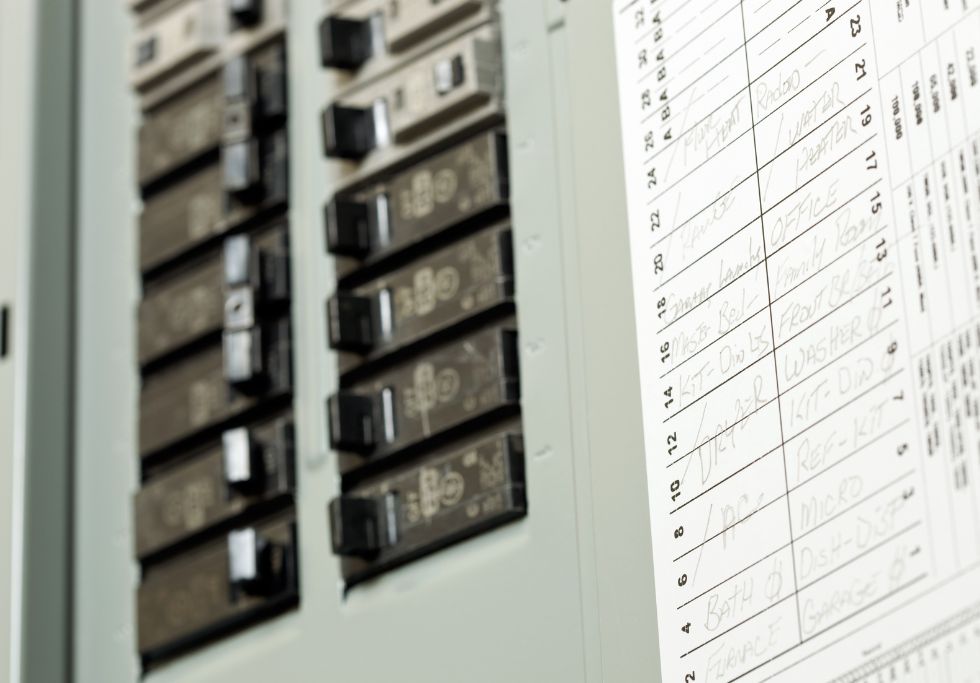
Which AC Breaker Is Tripping?
Many central HVAC systems use separate branch circuits for the indoor and outdoor equipment:
- Outdoor unit: Usually powers the compressor and condenser fan in an air conditioner or heat pump.
- Indoor air handler: Usually powers the blower and indoor controls.
- Electric auxiliary heat: Heat strips can require one or more additional high-amperage circuits depending on the equipment.
Not every system is wired the same way. Package units, older installations, communicating systems, and equipment with supplemental heat can use different arrangements. Do not remove the electrical panel cover to identify circuits.
If the panel is clearly labeled, note which breaker tripped. That information can help the technician focus the diagnosis.
What Causes an AC to Keep Tripping the Breaker?
| Possible Cause | What May Be Happening | Who Should Diagnose It? |
|---|---|---|
| Failing compressor | A compressor with damaged windings, an internal ground fault, mechanical failure, or difficulty starting can draw abnormal current or trip protection | HVAC technician |
| Weak or failed capacitor | A motor or compressor may struggle to start or run correctly when its required capacitor is out of specification | HVAC technician |
| Failed condenser fan or blower motor | A seized, shorted, overheated, or failing motor can draw abnormal current | HVAC technician |
| Damaged or shorted wiring | Insulation failure, rubbed conductors, corrosion, pests, vibration, or storm damage can create a short or ground fault | HVAC technician or electrician, depending on location |
| Loose or overheated electrical connection | High-resistance connections can generate heat, damage terminals, and cause unstable operation | HVAC technician or electrician |
| Failed contactor, relay, or control component | Damaged electrical components can short, chatter, overheat, or fail to control motors correctly | HVAC technician |
| Dirty or obstructed condenser coil | Poor heat rejection can raise condensing temperature and compressor workload, especially in extreme heat; it is usually a contributing stressor rather than proof of the electrical fault | Homeowner can clear loose debris; technician for deeper cleaning and diagnosis |
| Refrigerant or airflow problem | Incorrect operating pressures, frozen coils, or poor heat transfer can stress the system, but a refrigerant problem should not be assumed solely from a breaker trip | HVAC technician |
| Shorted electric heat component | An electric heat element, sequencer, relay, wiring connection, or related component can fault on an air-handler or heat circuit | HVAC technician |
| Worn, damaged, loose, or incorrect breaker | The protective device or its panel connection may be defective even when the HVAC equipment is operating normally | Licensed electrician |
Can a Dirty Air Filter Trip the AC Breaker?
A dirty filter can make an HVAC system operate poorly, but it should not be treated as a primary explanation for a tripped high-amperage AC breaker. A severely restricted filter can reduce airflow, contribute to evaporator freezing, increase blower stress, and create other operating problems. Those conditions may interact with an already marginal component, but the breaker trip still deserves electrical diagnosis if it repeats.
ENERGY STAR recommends inspecting, cleaning, or changing HVAC filters monthly. Replace or clean the filter when needed according to its type and manufacturer instructions.
Can a Dirty Outdoor Coil Cause a Breaker Trip?
It can contribute. The condenser’s job is to reject heat outdoors. When the coil is heavily blocked by dirt, grass clippings, lint, or vegetation, the system may operate at higher temperatures and pressures and the compressor can work harder.
ENERGY STAR notes that dirty condenser coils reduce cooling performance, increase runtime, increase energy use, and can shorten equipment life. A dirty coil does not prove why the breaker tripped, but removing obvious airflow restrictions is worthwhile.
Homeowners can safely remove loose leaves and vegetation from around the cabinet. Follow the equipment manufacturer’s instructions before rinsing a coil. Do not remove panels, place hands inside the cabinet, use a pressure washer, or spray energized electrical components. If the coil is deeply impacted or the breaker has tripped more than once, have a technician clean and test the system.
Can a Bad Capacitor Trip the Breaker?
Yes. Depending on the equipment design, a failed or out-of-specification capacitor can prevent a motor or compressor from starting or running properly. A stalled or hard-starting motor can draw abnormal current.
Capacitors can retain a dangerous electrical charge after power is disconnected. Homeowners should not remove access panels, touch capacitor terminals, or attempt capacitor testing or replacement.
A capacitor problem can also present as humming, failed starts, intermittent operation, or AC short cycling, but those symptoms are not unique to capacitors.
What Does It Mean If the Compressor Is Grounded or Shorted?
A compressor contains an electric motor sealed inside the refrigerant circuit. If the motor windings or internal insulation fail, current can take an unintended path to ground or between windings. That can trip the breaker or other protection and may mean the compressor requires replacement.
A technician can test winding resistance, insulation to ground, operating current, starting behavior, capacitor condition, supply voltage, and other factors before condemning a compressor. A breaker trip alone is not enough to declare the compressor failed.
If a compressor is confirmed failed, the repair-versus-replacement decision depends on system age, warranty coverage, compressor cost, refrigerant type, coil condition, efficiency, and the overall condition of the equipment. For older R-410A systems, review our R-410A transition guide for Florida homeowners before deciding between a major repair and replacement.
Why Did the AC Breaker Start Tripping After a Thunderstorm?
The timing may be meaningful, but it is not proof that lightning caused the failure. Power disturbances can come from lightning, utility switching, damaged power lines, restoration after an outage, or events inside the home.
The National Weather Service office in Melbourne calls Central Florida the “Lightning Capital” of the United States, and Vaisala Xweather’s 2025 report ranked Florida first among states for lightning density, at 305 lightning events per square mile. That makes storm-related electrical damage a reasonable consideration when an HVAC problem begins immediately after severe weather.
ESFI explains that power surges can damage heating and air-conditioning systems and that lightning is one possible external source. Surges can also originate inside the electrical system when large loads switch on or off.
Tell the technician if the problem began after a storm, outage, brownout, or other power disturbance. That history can help guide inspection of contactors, boards, motors, capacitors, surge devices, wiring, and the breaker.
Should Florida Homes Have Surge Protection for the AC?
Surge protective devices can reduce the risk of damage from transient voltage spikes, including events that can affect HVAC electronics. ESFI notes that the 2020 National Electrical Code requires Type 1 or Type 2 surge protective devices in new and renovated homes, and NEC 230.67 requires a whole-home surge protective device on new and replaced home electrical services. Breakers and fuses protect against overcurrent; they do not stop voltage surges.
Protection can be installed at different levels, including service or panel-level surge protection and equipment-level protection. The correct device, installation location, grounding and bonding, voltage rating, and coordination should be determined by a qualified electrician or HVAC professional as appropriate.
No surge protector can guarantee that HVAC equipment will survive every electrical event, including a direct lightning strike.
Why Does the Breaker Only Trip on Very Hot Afternoons?
High outdoor temperatures can expose a marginal problem. During peak summer conditions, the cooling system may run continuously for long periods while the condenser rejects heat into very hot outdoor air. Dirty coils, weak electrical components, low voltage, motor problems, or compressor wear may become more apparent under those conditions.
However, it is too broad to say that every air conditioner simply draws its highest current whenever outdoor temperature rises. Compressor current depends on equipment design, refrigerant conditions, voltage, airflow, load, staging, and operating pressures. Heat-only trips are useful diagnostic information, not a diagnosis by themselves.
What Should You Do When the AC Breaker Trips?
- Turn the thermostat to Off so the system stops calling for cooling before you touch the breaker.
- Check for immediate hazards. Look and smell for smoke, burning odors, melted plastic, scorching, water near electrical equipment, or abnormal buzzing. Do not touch a breaker that appears damaged or unsafe.
- Identify the tripped breaker if the panel is clearly labeled. Note whether it appears to serve the outdoor unit, air handler, or electric heat.
- Inspect the air filter. Replace or clean it if needed according to the manufacturer’s instructions.
- Check the outdoor unit from the exterior. Remove loose leaves or vegetation that visibly obstruct airflow. Do not open the cabinet.
- Reset the breaker once if there are no hazard signs. Move it fully to Off and then back to On.
- Observe the system. Note whether the breaker trips immediately, during compressor startup, after several minutes, or only during extreme heat.
- If it trips again, stop. Leave the breaker off and schedule professional diagnosis.
When Is a Tripping AC Breaker an Emergency?
Seek urgent assistance when:
- There is smoke or an active burning smell
- You see melted insulation, scorch marks, or damaged electrical equipment
- The breaker or panel is buzzing, crackling, or visibly arcing
- Water has reached the electrical panel, disconnect, air-handler controls, or other energized equipment
- The breaker trips immediately each time power is restored
- You hear repeated hard-start attempts, loud electrical buzzing, or abnormal compressor noises
- The panel, breaker, disconnect, or equipment appears physically damaged after a storm
If there is active fire or smoke, leave the area and call 911. For urgent HVAC equipment problems without an active fire, contact SunVena’s 24/7 emergency HVAC service.
Do You Need an HVAC Technician or an Electrician?
That depends on where the fault is found.
- HVAC technician: Compressor, capacitor, contactor, condenser fan, blower, refrigerant circuit, internal HVAC wiring, equipment controls, heat strips, or other components inside the HVAC system.
- Electrician: Breaker, electrical panel, branch-circuit wiring outside the HVAC equipment, service issues, panel damage, or electrical work outside the HVAC contractor’s licensed scope.
Sometimes diagnosis begins with the HVAC technician because the breaker trips only when the equipment operates. If testing shows that the HVAC equipment is electrically normal and the problem is in the panel or branch circuit, the repair may need to be completed by a licensed electrician.
What Will an HVAC Technician Test?
A proper breaker-trip diagnosis may include:
- Equipment nameplate electrical ratings
- Breaker and disconnect rating
- Supply voltage under load
- Motor and compressor operating current
- Starting current and startup behavior
- Capacitor values
- Contactor and relay condition
- Compressor winding resistance and insulation to ground
- Fan and blower motor condition
- Electrical terminals and signs of heat damage
- Control boards, sensors, and safety circuits
- Condenser and evaporator condition
- Airflow and refrigerant operating conditions when relevant
The goal is to determine why the protective device opened, not simply replace the breaker or the first part that looks old.
How Can You Reduce the Chance of Future Breaker Trips?
Inspect the Air Filter Monthly
ENERGY STAR recommends checking HVAC filters monthly, especially during heavy cooling use. Clean or replace the filter when required rather than relying on a universal 30-day or 60-day schedule.
Keep the Outdoor Unit Clear
Keep leaves, landscaping, and loose debris from obstructing condenser airflow. Follow the manufacturer’s required service clearances rather than relying on one universal distance for every unit.
Schedule Preventive HVAC Maintenance
ENERGY STAR’s HVAC maintenance checklist recommends checking electrical connections, measuring voltage and motor current, inspecting controls, cleaning coils as needed, checking refrigerant operation, and verifying proper startup and shutdown.
Professional AC maintenance can identify overheated terminals, deteriorating capacitors, abnormal motor current, dirty coils, or other developing problems before they become an outage.
Consider Properly Installed Surge Protection
Surge protection can reduce risk from transient overvoltage events. Ask a qualified professional whether whole-home protection, equipment-level protection, or a coordinated combination makes sense for your electrical system and HVAC equipment.
Frequently Asked Questions
Why does my AC breaker trip as soon as the compressor starts?
An immediate trip at compressor startup can point toward a compressor electrical fault, starting problem, capacitor issue, shorted wiring, failed motor, or another high-current condition. Leave the breaker off after a repeated trip and have the equipment tested.
Why does the breaker trip after the AC runs for 10 or 20 minutes?
A delayed trip may involve a component overheating, a motor drawing excessive current as it warms, high operating pressure, a poor electrical connection, voltage issues, or a breaker that is heat-sensitive or failing. The timing is useful diagnostic information but does not identify the cause by itself.
Can I replace a 30-amp AC breaker with a 40-amp breaker?
No, not unless a qualified professional confirms that the nameplate MOCP, conductors, disconnect, and panel all permit a 40-amp breaker. Air-conditioning equipment has nameplate overcurrent requirements. Increasing breaker size to stop trips can create an electrical hazard.
Can a clogged filter make the AC breaker trip?
A severely restricted filter can contribute to airflow problems, coil freezing, blower stress, and poor HVAC performance, but it is not a reliable standalone explanation for a repeated circuit-breaker trip. If replacing a dirty filter does not end the problem, the electrical fault still needs diagnosis.
Can low refrigerant trip a circuit breaker?
Low refrigerant can cause poor cooling and, in some systems, low-pressure protection or evaporator freezing. It should not automatically be blamed for an overcurrent breaker trip. A technician should measure refrigerant and electrical conditions rather than diagnosing the problem from the breaker alone.
Could the breaker itself be bad?
Yes. Breakers can fail, connections can loosen or overheat, and panel damage can create problems. Because the breaker is part of the home’s electrical distribution system, testing or replacement may require a licensed electrician.
Why did the problem start after a thunderstorm?
Lightning or another power disturbance may have caused or exposed damage, but timing alone does not prove the cause. Mention the storm to the technician and have the relevant electrical and HVAC components inspected.
Will a surge protector stop the AC breaker from tripping?
No. A surge protective device limits transient voltage spikes. It does not repair an overloaded motor, grounded compressor, shorted wire, failing capacitor, defective breaker, or other existing fault. Surge protection and overcurrent protection perform different jobs.
AC Breaker-Trip Repair in Central Florida
A breaker that trips repeatedly is a symptom, not a diagnosis. The lasting repair may involve the compressor, motor, capacitor, electrical connections, control components, HVAC wiring, breaker, branch circuit, or another condition that only shows up under load.
SunVena HVAC diagnoses air-conditioning and heat-pump electrical problems throughout Greater Orlando and Volusia County. If your AC breaker trips again after one reset, leave it off and schedule HVAC service online or call (321) 621-5156. SunVena provides 24/7 emergency HVAC repair support.
Important safety note: This article provides general homeowner guidance and does not replace an on-site electrical or HVAC diagnosis. Do not remove electrical panel covers, open energized HVAC compartments, test capacitors, handle refrigerant, bypass protective devices, or change breaker sizes unless you are qualified and legally authorized to perform that work.