📌 Key Points
- What SEER2 measures: Cooling output per unit of electricity over a season, tested at higher airflow resistance than the old SEER test.
- Florida minimum: New split-system air conditioners must meet 14.3 SEER2, or 13.8 SEER2 at 45,000 Btu/h and above.
- Sweet spot: For most Florida homeowners, 16 to 18 SEER2 balances upfront cost, monthly savings, and comfort.
- Realistic savings: Moving from 14.3 to 16 SEER2 saves about $80 to $120 a year on a typical 3-ton system at Florida rates.
- Installation matters: A properly sized and installed system can outperform a poorly installed higher-SEER2 unit.
- No federal credit: The 25C tax credit ended for equipment placed in service after December 31, 2025.
As a Floridian, your air conditioner is your home’s first line of defense against relentless heat and oppressive humidity. With cooling seasons that stretch for most of the year, the efficiency of your system directly impacts your comfort, your indoor air quality, and, most tangibly, your monthly energy bill. This makes understanding SEER ratings not just a technicality, but a critical part of being a smart Florida homeowner.
This guide will walk you through what SEER means for you, cutting through the jargon to explain how it affects your wallet, your comfort, and how to choose the right system for our unique climate.
SEER Demystified: It’s Like MPG for Your AC
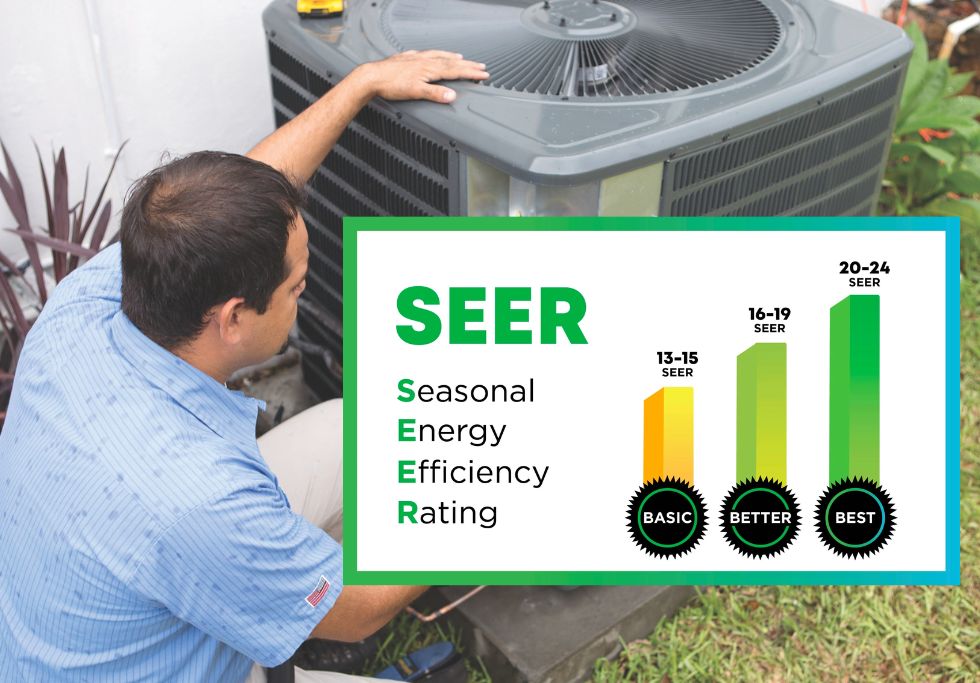
SEER stands for Seasonal Energy Efficiency Ratio. In simple terms, it measures how much cooling your system produces per unit of electricity consumed over an entire season. Think of it like miles per gallon (MPG) for your car: a higher SEER rating means you get more cool air for every dollar you spend on electricity.
The New Standard: SEER2 and What It Means for You
You may now see SEER2 ratings alongside or instead of the traditional SEER. This isn’t a marketing gimmick. It’s an updated testing method that creates a more realistic picture of real-world performance. The new test uses higher external static pressure (more airflow resistance) to better reflect real ductwork and how your system actually runs in your home.
The key takeaway: SEER2 numbers are slightly lower than their old SEER equivalents, but they represent the same efficiency level. A unit rated 15.2 SEER2 performs roughly like a 16 SEER unit under the old test. This shift helps ensure you’re comparing systems based on true, real-world efficiency, which is a vital factor in Florida’s demanding environment.
Navigating the Efficiency Spectrum: From Entry-Level to Premium
Not all SEER ratings are created equal, and the “best” choice depends on your home and goals. Here’s a breakdown of what you can expect at different levels:
Standard Efficiency (14.3 to 15 SEER2)
The minimum for most new home systems in Florida is 14.3 SEER2, or 13.8 SEER2 for air conditioners of 45,000 Btu/h or more, under the DOE’s regional standards. This tier represents the most budget-friendly upfront cost but will result in higher monthly energy bills. It can be a practical choice for a home you don’t plan to stay in long-term or if immediate cost is the primary concern.
Mid-Range Efficiency (16 to 18 SEER2)
This is the sweet spot for many Florida homeowners. You’ll see a meaningful reduction in energy consumption and utility costs compared to standard units, often with a very reasonable payback period. These systems frequently include features that improve humidity control and may qualify for various rebates.
High-Efficiency (19+ SEER2)
These are the top-tier systems, often featuring advanced variable-speed technology. They deliver maximum energy savings and superior, consistent comfort through exceptional humidity removal. The upfront investment is higher, but for homeowners who prioritize long-term savings and ultimate comfort, they can be a valuable investment.
Why SEER Matters More in Florida: Beyond the Bill
In a milder climate, SEER is a minor detail. In Florida, it’s a cornerstone of home performance for two major reasons:
Dramatic Impact on Energy Costs
Because your system runs for 8+ months of the year, efficiency shows up on every bill. Moving from 14.3 to 16 SEER2 typically saves about $80 to $120 a year on a 3-ton system at Florida’s average electricity rate. Replacing a much older system can save several hundred dollars a year. Over the system’s service life, those savings add up.
The Crucial Link to Humidity Control
Comfort here isn’t just about temperature; it’s about managing moisture. Higher SEER systems, especially those with variable-speed components, run longer at lower speeds. This sustained operation is far more effective at wicking humidity from your air than a standard unit that simply blasts on and off. The result? A home that feels genuinely cool and dry, not just cold and clammy.
The Critical Caveat: Installation Is Everything
A high SEER rating is a promise of potential efficiency, not a guarantee. That potential is only realized with:
- Precise Sizing: A “Manual J” load calculation (not a rule of thumb) is essential.
- Expert Installation: Even the best unit will underperform if installed poorly.
- Supporting Systems: Well-sealed, insulated ductwork and a properly calibrated thermostat are non-negotiable.
A properly installed 16 SEER2 system can outperform a poorly installed 20 SEER2 system. Always choose your contractor as carefully as you choose the equipment.
Making Your Decision: A Florida Homeowner’s Checklist
When choosing the right SEER rating, ask yourself the following:
- How long do I plan to live in this home? Longer ownership justifies higher efficiency.
- What are my current monthly cooling costs? Higher bills show more savings potential.
- How important is humidity control and consistent comfort to me?
- What rebates are currently available? The federal Energy Efficient Home Improvement Credit (25C) ended for equipment placed in service after December 31, 2025. Ask your contractor and electric utility about current local rebates.
For most Florida homeowners, a system in the 16 to 18 SEER2 range offers the ideal balance of upfront cost, monthly savings, and enhanced comfort.
The Bottom Line
In Florida’s climate, your SEER rating is a key lever for controlling comfort and cost. While the highest number isn’t always the right choice, understanding this metric empowers you to move beyond the minimum standard. By pairing a wisely chosen efficiency level with a quality installation, you’re not just buying an appliance; you’re investing in years of reliable, cost-effective comfort for your home.